
This should be a pretty easy comparison.
Two-piece golf balls. Very low compression. Ionomer covers. Both aimed at golfers who want a really soft feel, easy distance and don’t fancy spending £50 on a dozen golf balls.
On paper, they’re remarkably similar.
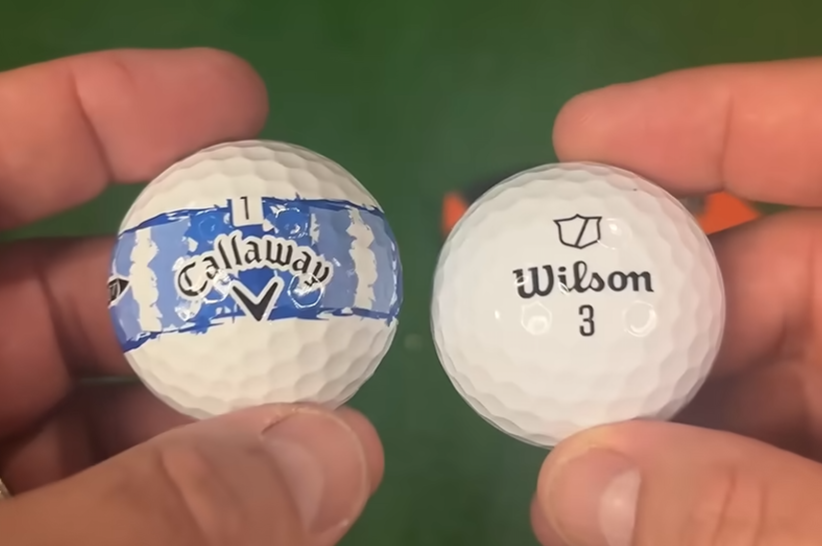
But I’ve now cut both of them open, played them and, more importantly, tested them on TrackMan with my own swing.
And despite how similar they look on the box, I’d choose one over the other.
Quite comfortably, actually.
So let’s get Jeff involved and find out why.
Callaway Supersoft vs Wilson Duo Soft: What’s the Difference?
Before getting into my testing, let’s look at what we’re actually comparing.
Both balls are designed with the average golfer in mind.
Not tour professionals.
Not someone swinging a driver at 120mph.
Golfers like you and me who want decent distance, a nice feel and a golf ball that isn’t painful to lose in the trees.
The basic recipes are very similar:
| Callaway Supersoft | Wilson Duo Soft | |
|---|---|---|
| Construction | 2-piece | 2-piece |
| Cover | Ionomer | Ionomer |
| Compression | Roughly high 30s/low 40s | Around 40 |
| Main focus | Soft feel & distance | Soft feel & distance |
| Dimple design | Callaway HEX | 302 dimples |
So why should you choose one over the other?
That’s where things get interesting.
Callaway Supersoft: There’s a Reason It’s So Popular
Let’s start with the Callaway Supersoft.
It’s probably one of the most recognisable soft golf balls around.
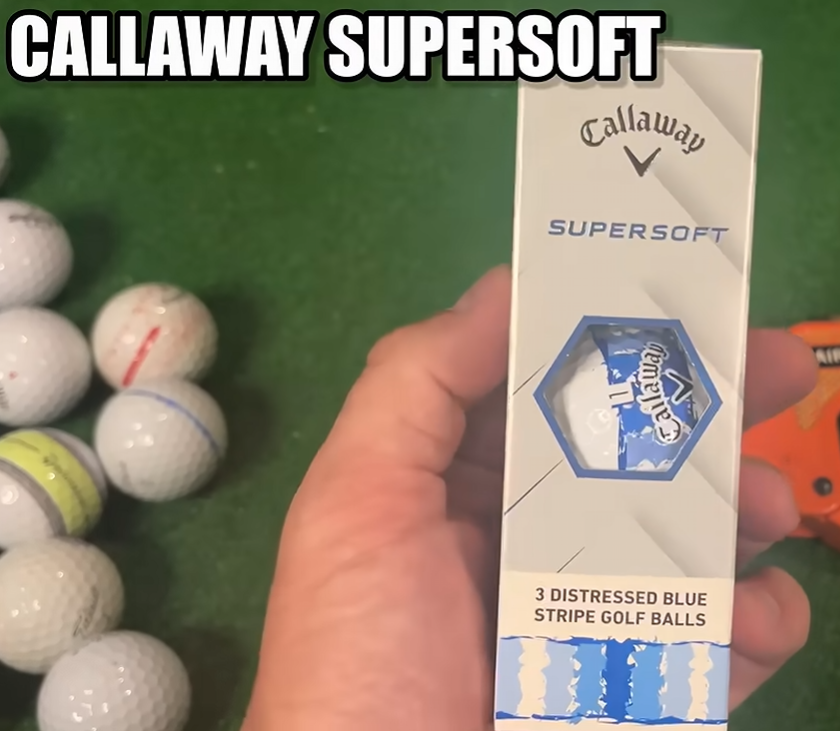
And Callaway haven’t tried to make it something it isn’t.
This is all about soft feel and easy distance.
You’ve got a two-piece construction, an ionomer cover, Callaway’s distinctive HEX aerodynamic design and an extremely low-compression core.
And when I say soft, I mean really soft.
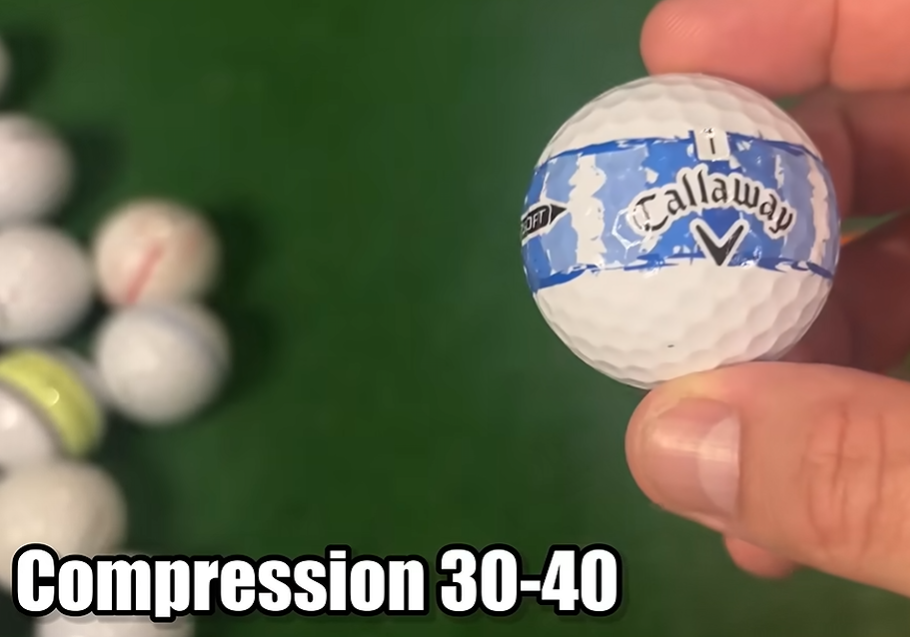
Compression measurements vary depending on who’s testing them and how they’re measured, but we’re generally talking somewhere around the high 30s to low 40s.
That makes the Supersoft an obvious option if you’ve got a slower swing speed, you’re a senior golfer, you’re a higher handicapper or you simply hate the feeling of hitting a really firm golf ball.
But there’s something I think golfers sometimes get wrong.
Soft doesn’t automatically mean short.
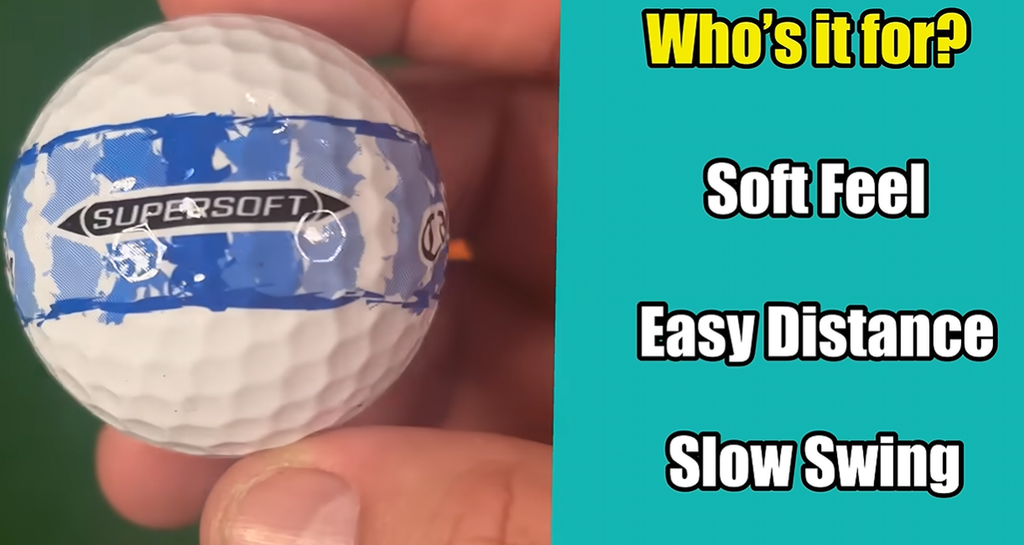
The Supersoft Can Still Be Long
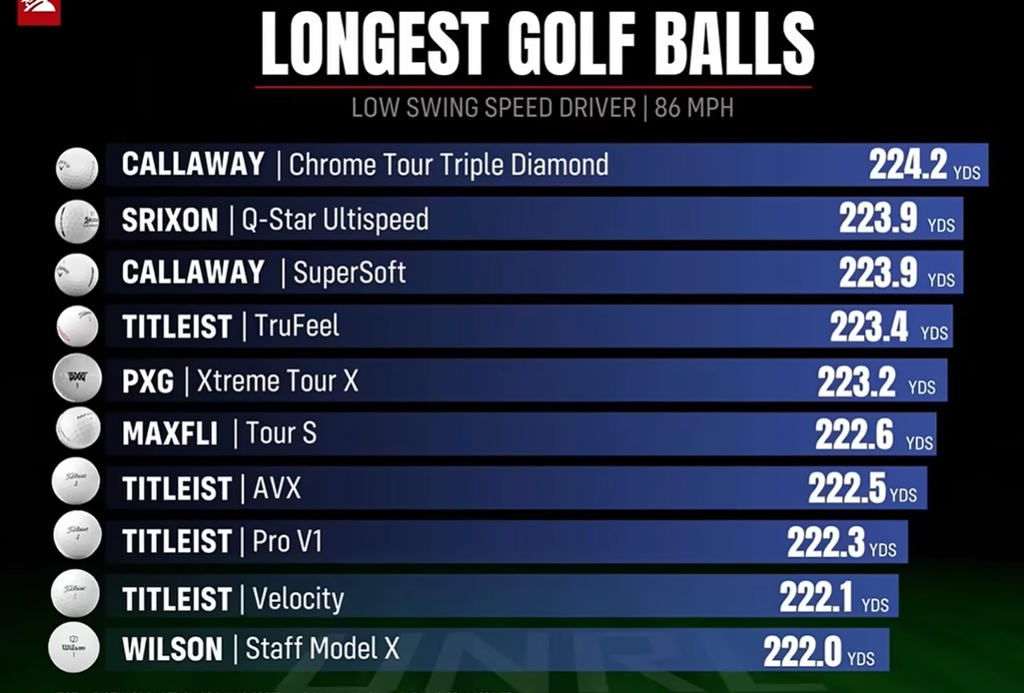
Independent robot testing has shown that the Supersoft can produce some really impressive driver distance, particularly at lower swing speeds.
And that’s important.
There’s an old idea that if you want maximum distance, you need to hit a rock-hard golf ball.
That’s really not the case anymore.
But there is a trade-off with the Supersoft.
Spin can be low.
That’s potentially great from the tee if you’re someone who produces too much spin.
With your irons, though, really low spin isn’t always such good news.
You might get some extra distance, but you’re potentially sacrificing stopping power when the ball reaches the green.
Then there’s the cover.
The Supersoft uses ionomer rather than urethane.
Again, there’s nothing wrong with that.
But you need to understand what you’re buying.
If you’re expecting Pro V1-style greenside spin from a Supersoft, you’re probably looking at the wrong golf ball.
That’s not what it’s designed to do.
Let’s Cut the Callaway Supersoft Open
This is where Jeff comes in.
If you’ve not watched Up Close Golf before, Jeff is my golf ball cutting tool.
Yes. My cutting tool has a name.
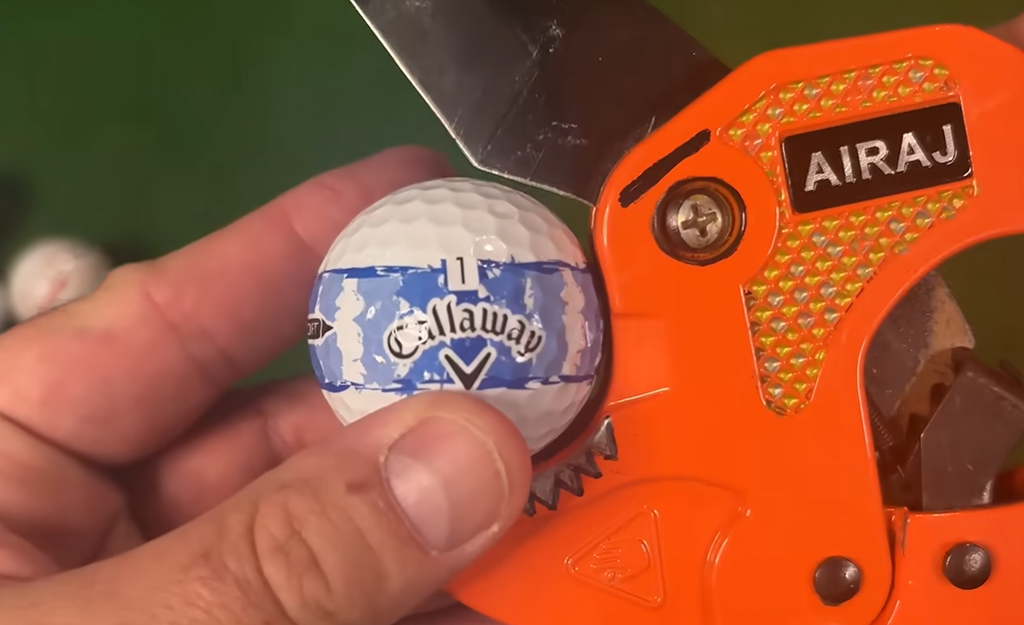
I ran a community poll on the Up Close Golf YouTube channel to name him, Jeff won, and somehow he’s since developed a bit of a cult following.
He’s now cut open a lot of golf balls.
I’ve personally cut open and reviewed more than 300 golf balls on the channel, and I’m still fascinated by what we find inside them.
I’m not a scientist.
I’m just an average golfer who’s been playing for more than 30 years, worked at a top-ranked UK golf course when I was younger and has become slightly obsessed with finding out what we’re actually paying for.
And inside the Supersoft, things are pretty straightforward.
Cut it in half and you’ve got:
- One huge soft core
- A thin ionomer cover
- That’s basically it
Simple.
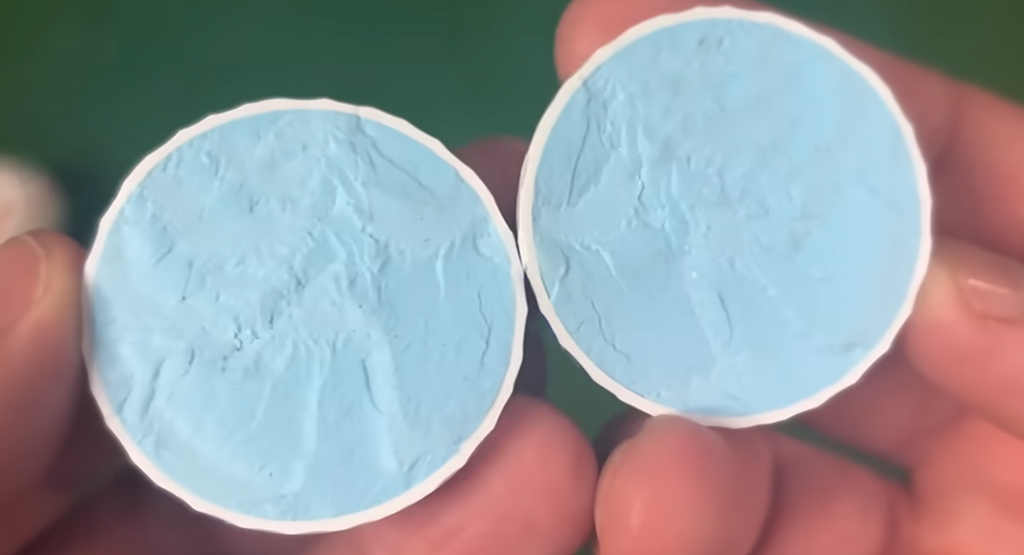
But simple isn’t necessarily bad.
In fact, for this type of golf ball, that’s exactly what I’d expect.
One Thing I Always Check With Supersoft
There’s something else I’m looking for when Jeff cuts open a Supersoft.
How centred is that core?
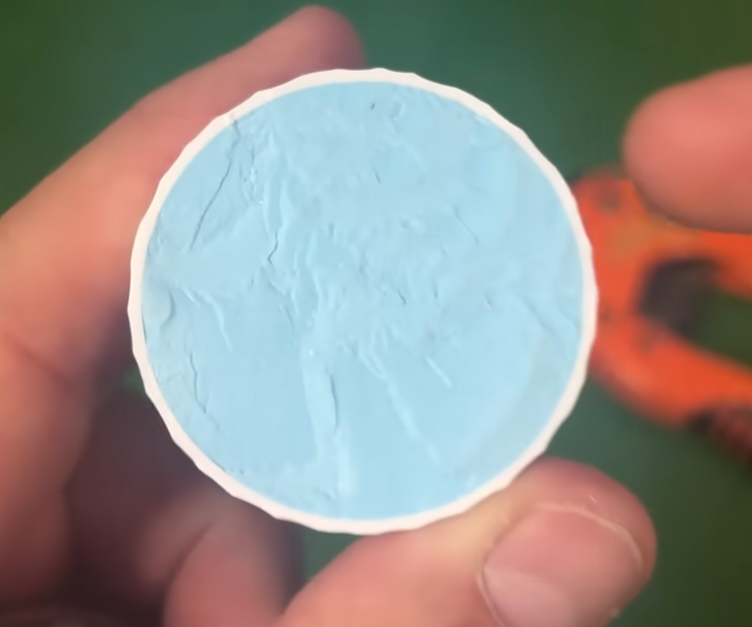
I’ve cut open Supersoft golf balls previously where the core hasn’t looked perfectly centred or the cover thickness has appeared slightly uneven.
That doesn’t mean every Callaway Supersoft has a problem.
Far from it.
But when you’ve cut open as many golf balls as I have, you naturally start looking for these things.
It’s one of the reasons I enjoy cutting them open.
You can read all the marketing in the world, but eventually I just want to see what’s actually inside the thing.
Wilson Duo Soft: Very Similar on Paper
Next up is the Wilson Duo Soft.
And if the Supersoft sounded familiar, wait until you hear this.
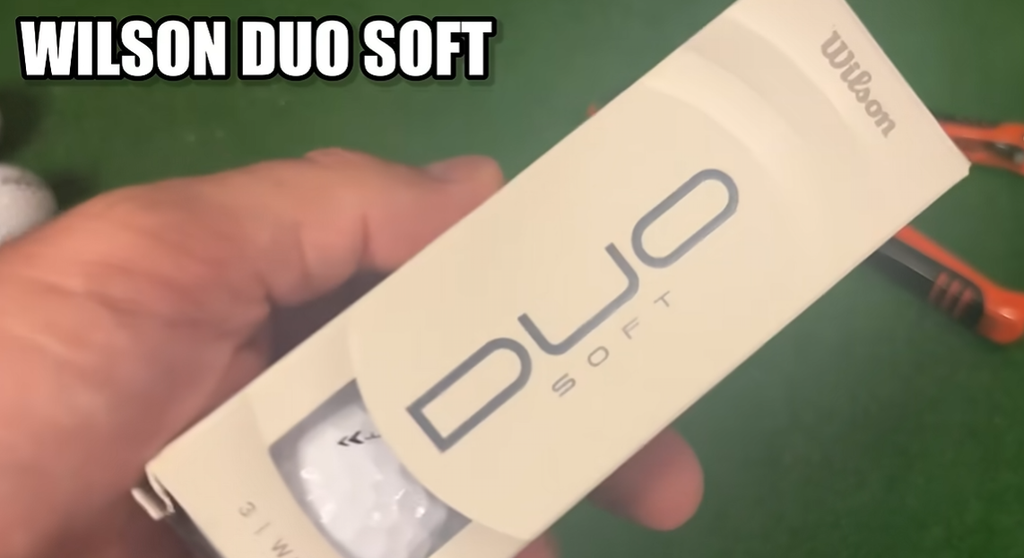
The Duo Soft is another ultra-soft, two-piece golf ball.
It’s got an ionomer cover.
Compression is around 40.
And Wilson uses a 302-dimple pattern.
So we’ve got another golf ball focused heavily on soft feel and easy distance.
In other words, it’s chasing almost exactly the same golfer.
Wilson have really built the Duo name around softness.
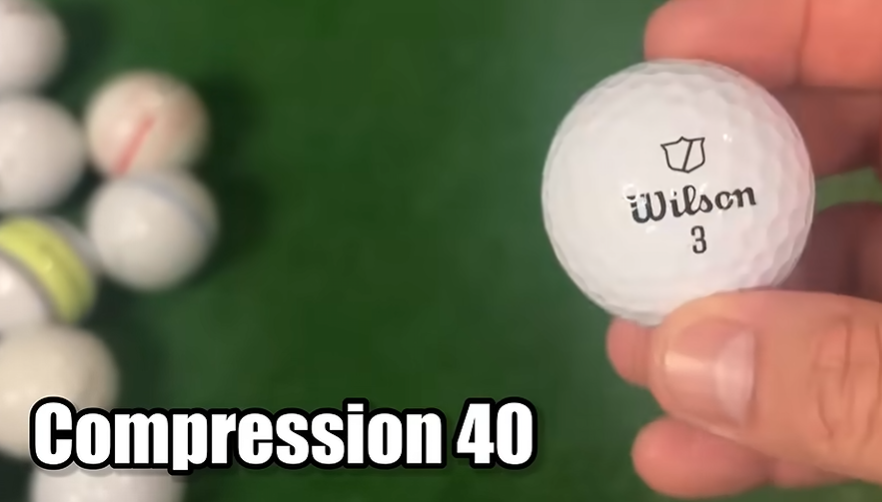
The large core is designed to return energy efficiently at impact while that low compression produces the really soft sensation these golf balls are known for.
Having played both, though, I do notice a difference.
The Duo Soft feels soft without feeling quite as mushy to me.
That’s completely subjective.
You might hit them and think differently.
And that’s fine.
Feel is one of those things where I don’t think a robot can really help us.
Don’t Expect Huge Greenside Spin From the Duo Soft Either
Just like the Supersoft, the Duo Soft uses an ionomer cover.
So again, this isn’t a golf ball I’d choose if my number-one priority was maximum greenside spin.
That’s not really the point.
These balls are trying to give you:
Soft feel.
Easy distance.
Good value.
If that’s what you want, both make sense.
And this is something I’m constantly trying to get across with Up Close Golf.
There isn’t one golf ball that’s perfect for everybody.
Trying different golf balls and different brands can genuinely help you find something that works better for your own game.
Sometimes it might not be the ball you expected.
And the Duo Soft is a perfect example of that for me.
Callaway vs Wilson YouTube Review
Jeff Cuts Open the Wilson Duo Soft
Time for Jeff again.
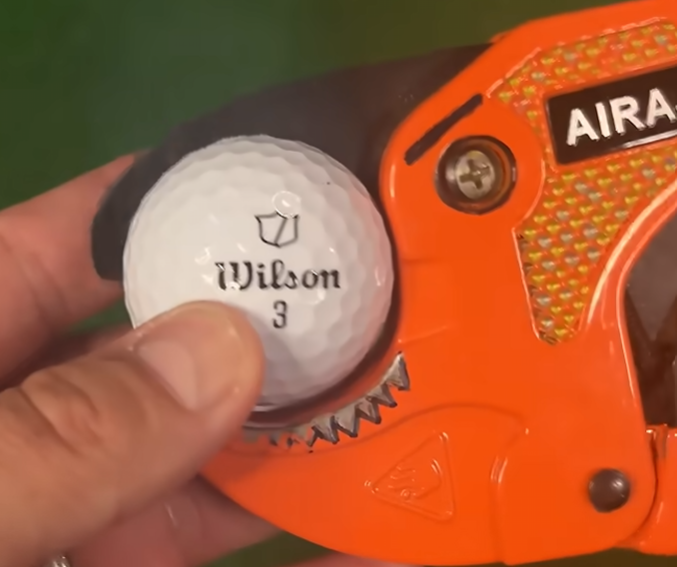
Cut the Wilson open and, unsurprisingly, we’ve got another simple two-piece construction.
Large core.
Thin ionomer cover.
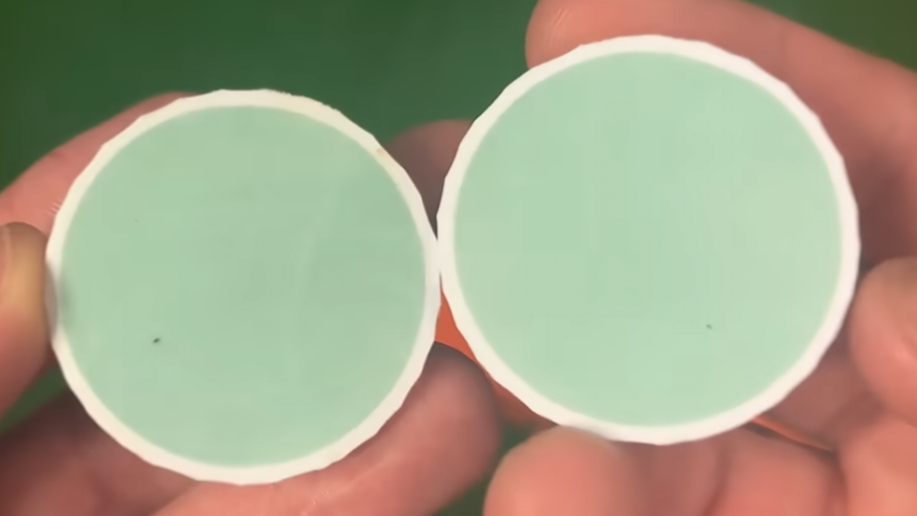
But putting the Supersoft and Duo Soft halves next to each other is where this becomes much more interesting.
I can look directly at:
- Core size
- Cover thickness
- Core centring
- Overall finish
- Any obvious construction differences
That’s why I love doing these cut-open golf ball comparisons.
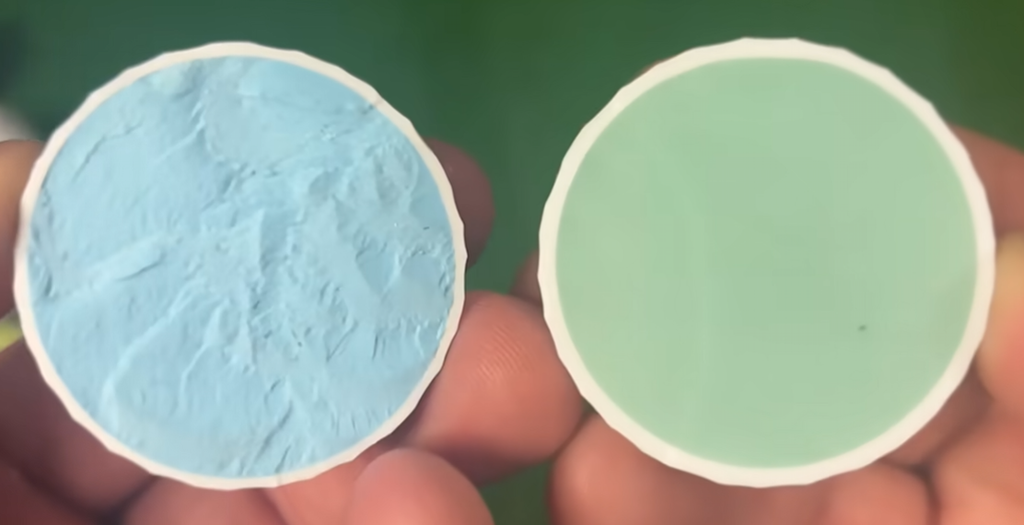
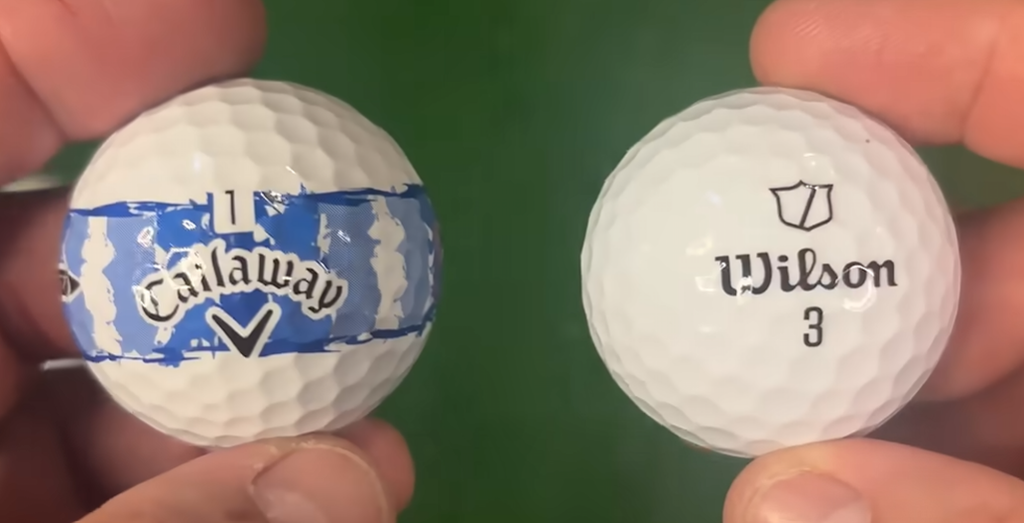
From the outside, the Callaway Supersoft and Wilson Duo Soft look like incredibly similar products.
Once Jeff has chopped them in half, we can actually see what we’re buying.
But cutting them open only tells us so much.
Because I’ve also hit them.
And that’s where I found a much bigger difference.
My TrackMan Test: Duo Soft vs Supersoft
I’ve personally tested both golf balls on TrackMan.

And my club speed was almost identical.
I was at 100.9mph with the Wilson Duo Soft and 100.4mph with the Callaway Supersoft.
So while this obviously isn’t laboratory testing, it’s a pretty useful comparison for my own game.
And the results surprised me.
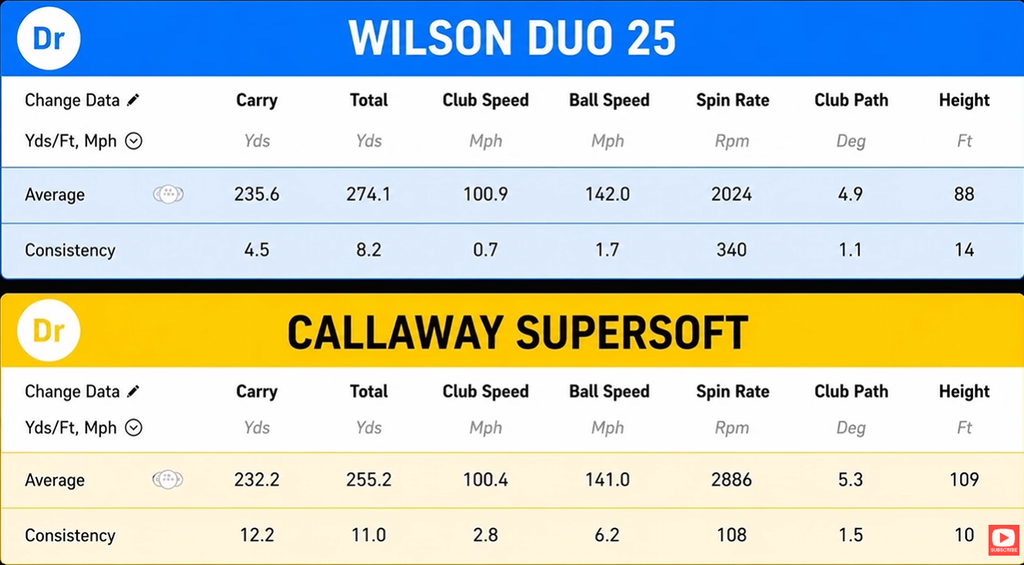
Wilson Duo Soft Driver Results
The Duo Soft produced:
- Club speed: 100.9mph
- Carry: 235.6 yards
- Total distance: 274.1 yards
- Spin: 2,024rpm
- Carry consistency: 4.5 yards
Callaway Supersoft Driver Results
The Supersoft produced:
- Club speed: 100.4mph
- Carry: 232.2 yards
- Total distance: 255.2 yards
- Spin: 2,886rpm
- Carry consistency: 12.2 yards
That’s a pretty significant difference.
The Duo Soft Was Longer For Me
With virtually identical club speed, the Wilson carried just over three yards further.
That’s useful.
But look at the total distance.
The Wilson finished at 274.1 yards compared with 255.2 for the Callaway.
That’s nearly 19 yards.
Now, I’m absolutely not going to tell you that buying a Wilson Duo Soft will suddenly give you another 19 yards.
It won’t.
That total distance number is heavily influenced by the lower spin and how TrackMan calculates the rollout after the ball lands.
Real-world conditions obviously change that.
Wet fairway? You’re not getting 19 yards of extra rollout.
Rock-hard summer fairway? Different story.
But there’s still something important happening here.
Look at the Spin Difference
This is probably the number that caught my attention most.
The Duo Soft was at 2,024rpm.
The Supersoft was at 2,886rpm.
That’s a difference of more than 850rpm from two golf balls that, on paper, look incredibly similar.
For my swing, that mattered.
My driver swing speed sits around 100mph, and I know from testing lots of different golf balls that excessive spin can cost me distance.
The Duo Soft brought that spin right down.
And the result was a ball flight and distance profile that simply suited my swing better.
That’s exactly why I’m always reluctant to say one golf ball is universally “better” than another.
It was better for me.
You might produce completely different numbers.
The Consistency Result Might Be Even More Impressive
There was another number I couldn’t ignore.
Carry consistency.
With the Wilson Duo Soft, my carry consistency was 4.5 yards.
With the Callaway Supersoft, it was 12.2 yards.
That’s a big gap.
Again, I’m not a robot.
These are golf balls being hit by me with my own wonderfully inconsistent golf swing.
But isn’t that sort of the point?
I’m not trying to find the perfect golf ball for a robot.
I’m trying to find the perfect golf ball for me.
And presumably that’s what you’re trying to do as well.
For my swing, the Duo Soft didn’t just produce better distance numbers.
It was considerably more consistent in this test too.
So Which One Is Better for Slower Swing Speeds?
This is where I’d be slightly careful.
It would be easy for me to look at my numbers and simply say:
But my swing speed is around 100mph.
That’s not necessarily the golfer these ultra-soft balls are primarily aimed at.
Independent robot testing has shown the Supersoft can perform extremely well for distance at slower swing speeds.
So if you’re swinging significantly slower than me, you shouldn’t assume my result will automatically be your result.
That’s one of the biggest lessons I’ve learned from testing golf balls.
Golf ball performance is personal.
Soft doesn’t automatically mean better for a slow swing.
Firm doesn’t automatically mean better for a fast swing.
And an expensive golf ball isn’t automatically better than a cheaper one.
You need to find the combination of flight, spin, feel and control that suits your game.
Callaway Supersoft vs Wilson Duo Soft: Which Would I Buy?
For me?
And it’s actually a fairly easy decision.
Both balls are extremely soft.
Both use a two-piece construction.
Both have ionomer covers.
Both are designed to give average golfers easy distance without costing a fortune.
But in my own TrackMan testing, the Duo Soft gave me:
- More carry
- Much lower driver spin
- More total distance
- Considerably better carry consistency
I also slightly prefer how the Wilson feels.
It’s still incredibly soft, but to me it doesn’t feel quite as mushy as the Supersoft.
Put all of that together and I’m taking the Wilson.
My Final Verdict
The important thing isn’t really that I’ve declared the Wilson Duo Soft the winner over the Callaway Supersoft.
It’s why I’ve picked it.
Not because Wilson’s marketing tells me it’s better.
Not because somebody on YouTube told me it’s better.
Not because a robot told me it’s better.
Because I’ve hit it myself and it performed better for my golf swing.
That’s the whole reason I started doing these tests.
I’ve been playing golf for over 30 years, and I’m still learning about golf balls just like everybody else.
The more than 300 balls Jeff and I have cut open have taught me a lot.
But probably the biggest lesson is incredibly simple.
Try different golf balls.
Don’t automatically play the brand you’ve always played.
Don’t assume you need the ball your mate uses.
And don’t assume paying more automatically means you’ll play better golf.
For my approximately 100mph driver swing, I’d put the Wilson Duo Soft in the bag ahead of the Callaway Supersoft.
Your answer might be completely different.
And that’s exactly why testing them is so interesting.
Which One Would You Play?
So I’m interested.
Callaway Supersoft or Wilson Duo Soft?
If you’ve played both, did you actually notice a difference?
And if there’s another pair of golf balls you’d like to see Jeff cut open and compare, let me know in the comments.
I read every single one.
If you’re struggling to work out what type of ball might suit your game, you can also get my free golf ball buying guide.
And if you’re one of the growing number of people who seem to like Jeff more than me, you can check out the Up Close Golf merch store.
About Craig

Craig is the creator of Up Close Golf, where he’s cut open and reviewed over 300 golf balls to help average golfers find the right ball for their game.
He’s been playing golf for more than 30 years and previously spent several years working at a top-ranked UK golf course. He’s also the owner of Fun Golf, a top-ranked UK golf blog, and an Amazon best-selling golf author.