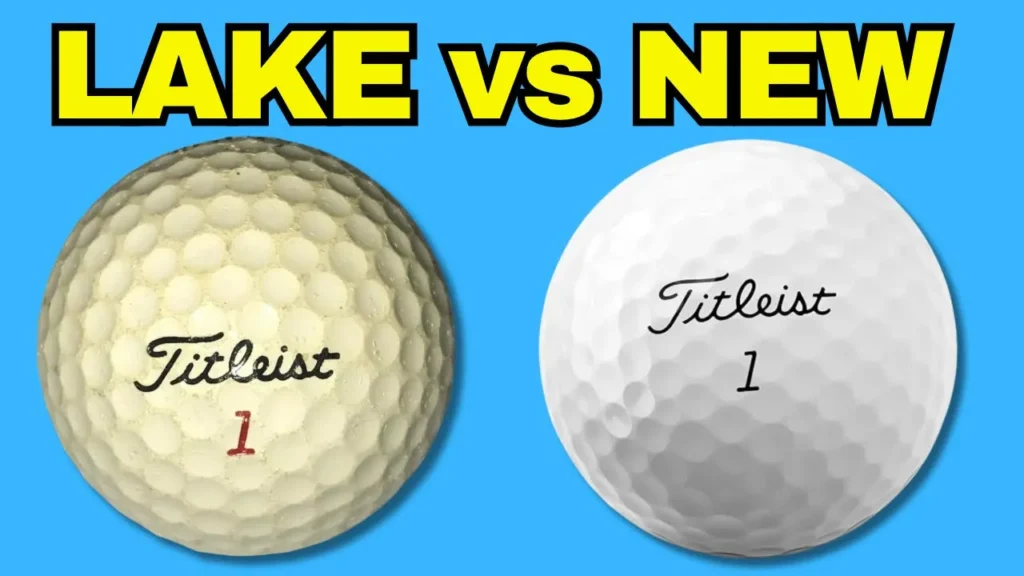

I’ve spent the last couple of years trying to answer a question that probably shouldn’t be quite so complicated. What’s the best way to clean dirty golf balls?
And when I say I’ve tried everything, I’m not exaggerating.
Washing-up liquid, bleach, sugar soap, the dishwasher…
I’ve even attacked a few hundred filthy lake balls with a pressure washer!
Some of these methods worked surprisingly well.
Others were a complete waste of time.
But after all my experiments, I’ve finally found a cleaning method that genuinely surprised me.
And the best bit?
You don’t need to spend a fortune or raid the cleaning cupboard for a load of chemicals.
So, if you’ve got a collection of dirty golf balls sitting in your garage, or you’ve found a few particularly horrible ones in the rough, here’s what I’ve learned.
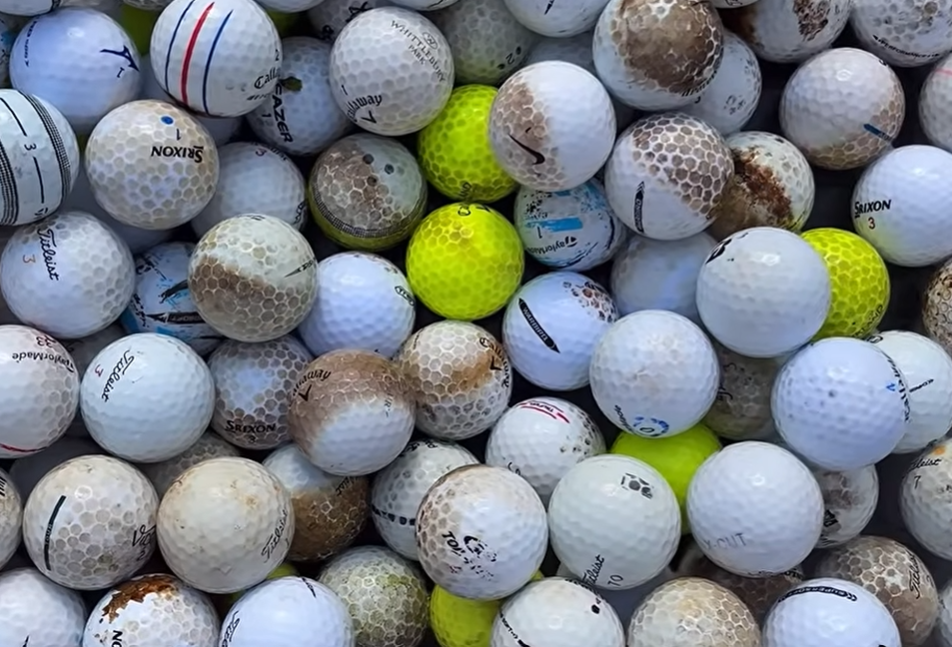
Why Is It So Difficult to Clean Some Golf Balls?
We’ve all done it.
Found a golf ball in the rough, given it a quick wipe with a towel and popped it into the bag.
But sometimes you find one that’s absolutely filthy.
I’m talking about those horrible brown stains that seem to have become part of the golf ball itself.
And lake balls can be even worse.
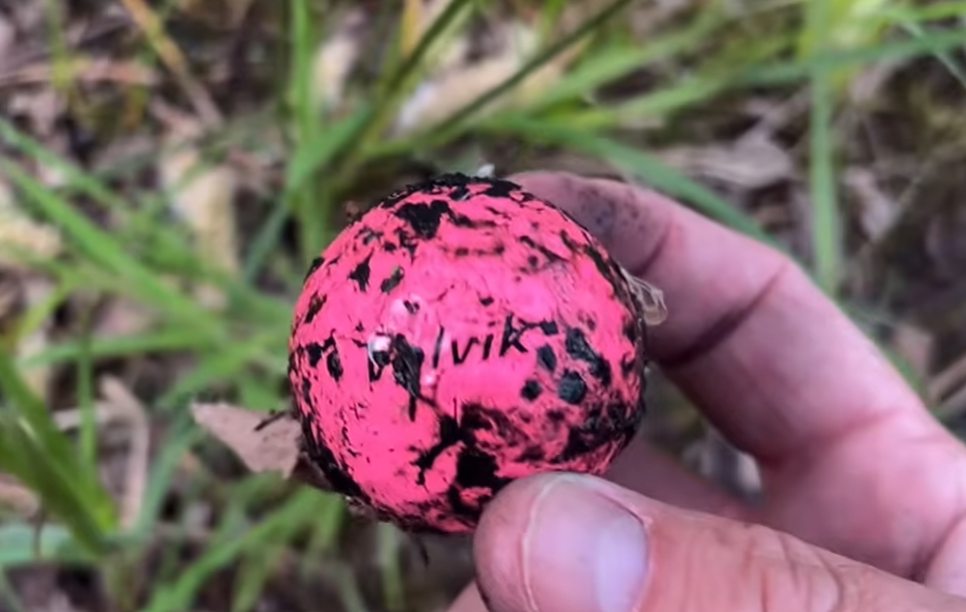
Mud, algae, grime and years of sitting underwater can leave them looking pretty disgusting.
Now, I’ve been playing golf for over 30 years and I’ve personally cut open and reviewed more than 300 golf balls on my YouTube channel, Up Close Golf.
And one thing I’ve learned is that golf balls aren’t all constructed the same way.
Some have relatively firm ionomer covers, while others use softer urethane covers.
That matters when you’re cleaning them, particularly if you’re using anything abrasive or chemically aggressive.
I’m not a scientist, and I’m not pretending to be one.
I’m just an ordinary golfer who’s spent a ridiculous amount of time experimenting with golf balls.
And I wanted to find out what actually works.
1. Washing-Up Liquid: The Simple Solution
Let’s start with the obvious one.
A bowl of warm water, a squirt of Fairy and an old toothbrush.
Job done.
Well… sort of.
When I first started experimenting with cleaning golf balls, washing-up liquid was one of the first things I tried.
And to be fair, it works pretty well.
For ordinary mud, grass stains and general dirt, it’s probably all most golfers will ever need.
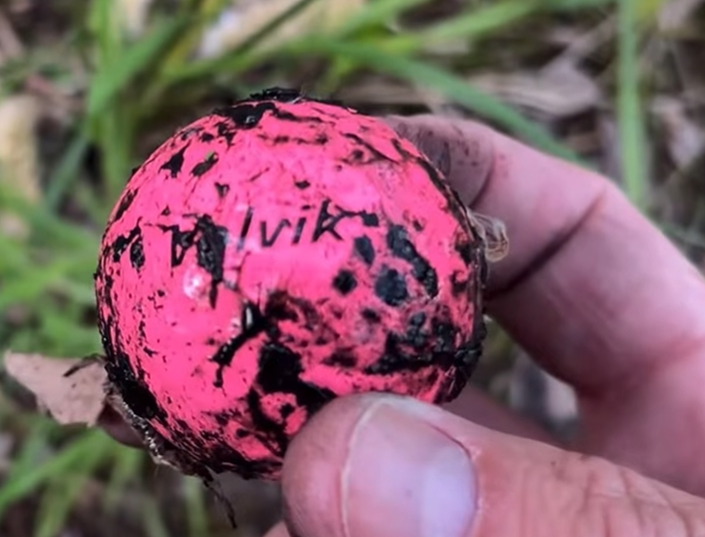
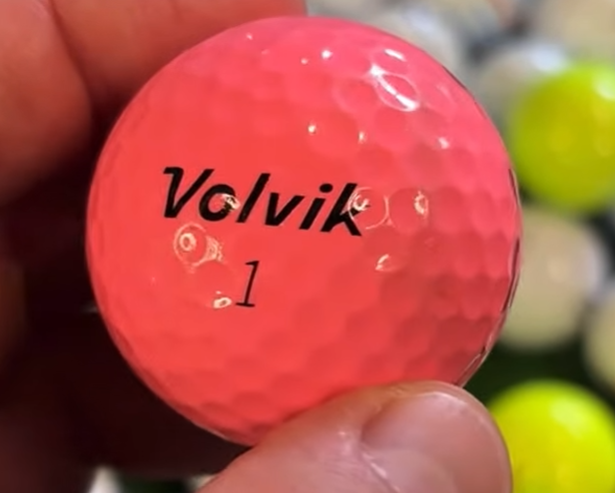
Give the balls a soak, gently scrub around the dimples and rinse them off.
Simple.
But when I started testing it on really dirty lake balls, things became a bit more difficult.
Some of those deep brown and yellow stains simply wouldn’t budge.
No matter how much scrubbing I did.
My verdict: For everyday cleaning, warm water and washing-up liquid is still my starting point. It’s cheap, straightforward and doesn’t require anything particularly fancy.
But for those really stubborn marks?
I wanted something better.
2. Sugar Soap: Surprisingly Good for Filthy Lake Balls
Now, this was an interesting experiment.
Last year, I managed to get my hands on 228 golf balls that had been recovered from a dried-up lake.
And when I say they were filthy…
I mean absolutely disgusting!
Some were covered in thick mud. Others had algae and all sorts of horrible stuff stuck to them.
There was no way I fancied cleaning every single ball individually with a toothbrush.
So I decided to try sugar soap.
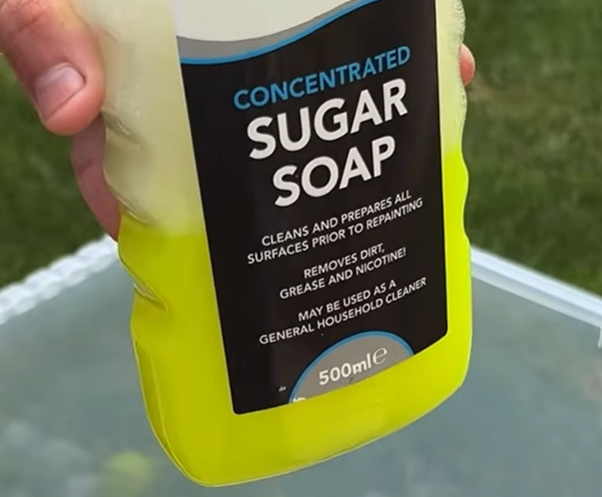
If you’ve never used it, sugar soap is a cleaning product normally used to remove grease and grime from surfaces before decorating.
Despite the name, there’s no actual sugar involved.
I wanted to see whether it could help loosen the dirt on these golf balls.
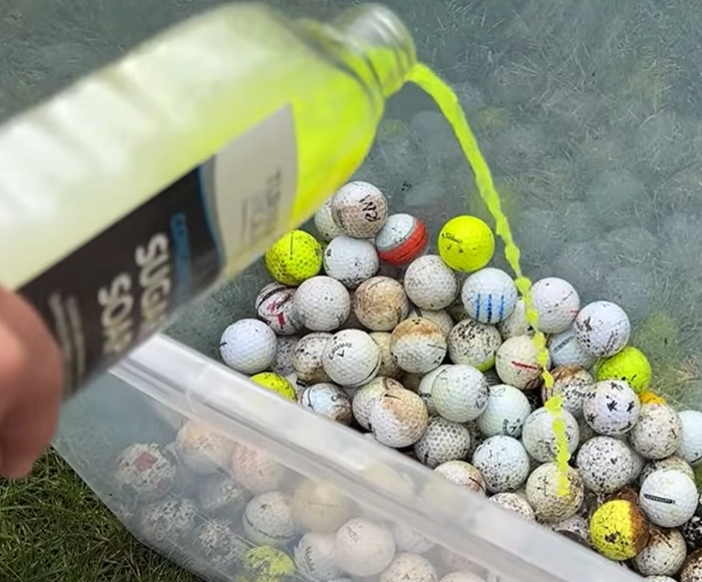
And actually, the results were pretty encouraging.
After soaking, a lot of the heavy surface grime was much easier to remove.
But here’s the thing.
It didn’t magically transform every golf ball into something that looked brand new.
Some of those deeper brown and yellow stains were still there.
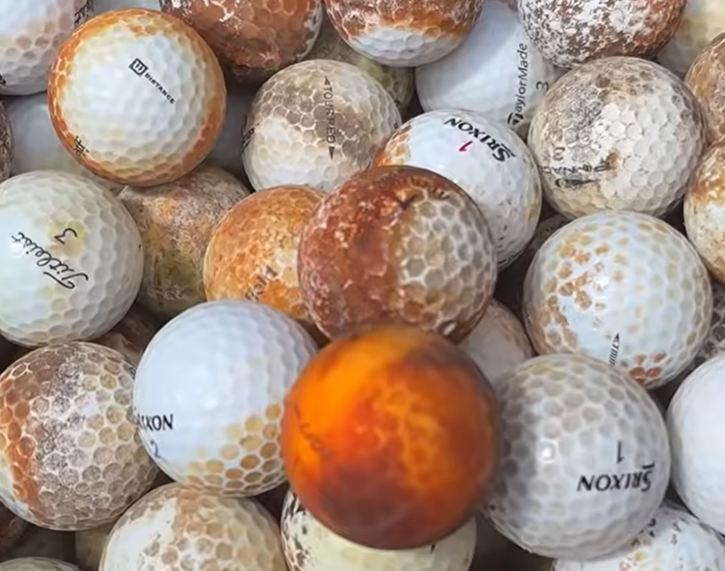
My verdict: Sugar soap was useful for loosening heavy grime on a large batch of dirty golf balls, but I wouldn’t call it a miracle cleaner. I also wouldn’t assume every cleaning chemical is suitable for every golf ball cover.
Watch the Video
3. Pressure Washing Golf Balls: Great Fun, But Is It Worth It?
Yes.
I actually got the pressure washer out.
And I’ve got to admit, this was probably one of the most satisfying golf ball cleaning experiments I’ve ever done.
Watching years of mud and grime being blasted off hundreds of golf balls was strangely enjoyable.
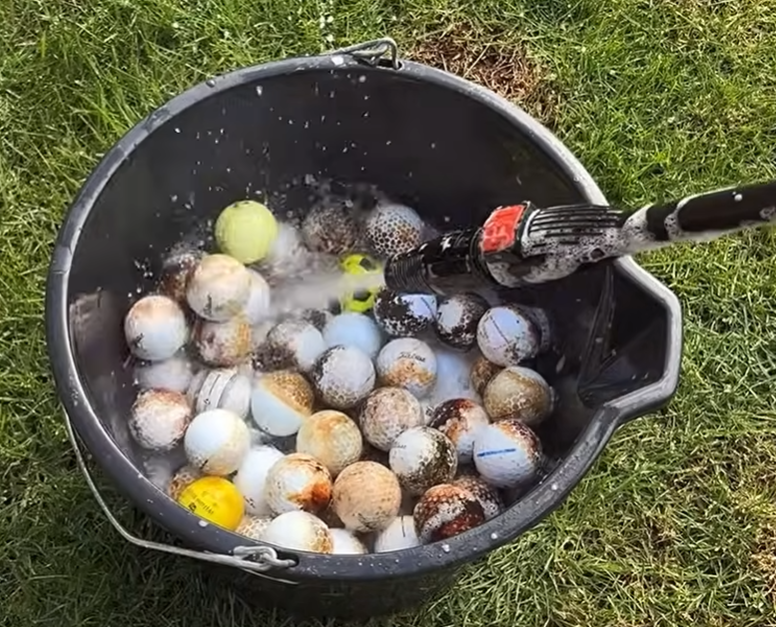
Although things didn’t always go according to plan.
Golf balls were flying around everywhere!
And while the pressure washer did a decent job of removing loose dirt, some of those really stubborn stains remained.
Which was a bit disappointing.
It’s also not something I’d particularly recommend doing at home. High-pressure water and loose golf balls aren’t a great combination.
My verdict: Entertaining? Absolutely. The most sensible way to clean a few golf balls after a round? Definitely not.
4. Can You Clean Golf Balls in a Dishwasher?
Now, this sounded like a brilliant idea.
Imagine throwing a load of dirty golf balls into the dishwasher, pressing a button and coming back an hour later to find them sparkling clean.
No scrubbing.
No mess.
Perfect!
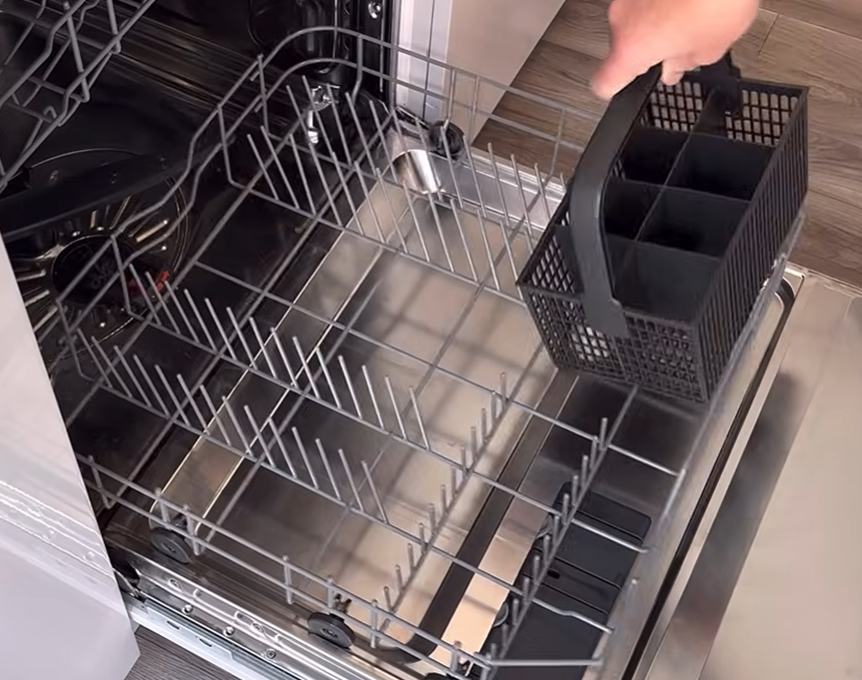
Except it didn’t quite work out like that.
For this experiment, I put some cut-open golf ball halves through a dishwasher cycle to see what would happen.
And the results?
Well… not particularly impressive.
There was still dirt sitting in some of the dimples, and they certainly didn’t come out looking brand new.
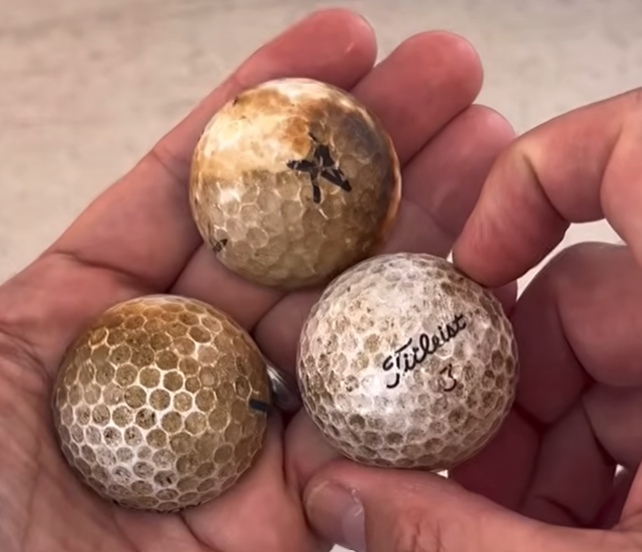
Which rather defeated the whole point.
There’s also another consideration.
Golf balls aren’t designed to be repeatedly exposed to dishwasher temperatures and cleaning tablets.
Now, I haven’t carried out performance testing to see whether a dishwasher cycle affects distance, spin or durability.
So I’m not going to pretend it definitely damages them.
But given the results I saw, I can’t see much reason to recommend it.
My verdict: Save the dishwasher for the plates and cutlery.
5. Bleach: Surely This Should Make Golf Balls White Again?
This was another method I thought might work particularly well.
After all, if you’ve got a dirty white golf ball, surely bleach is going to make it white again?
Well…
Not necessarily.
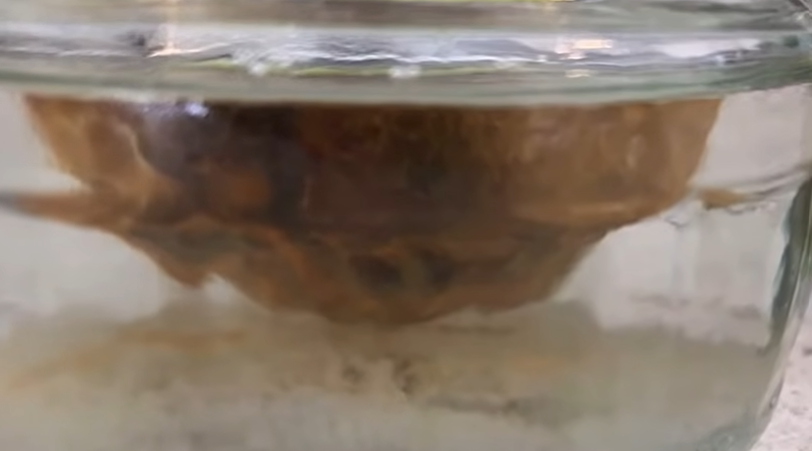
In my original bleach versus detergent experiment, the bleach helped remove some of the surface grime.
But those really stubborn brown and yellow stains?
A lot of them were still there.
And I certainly wouldn’t recommend routinely soaking your golf balls in bleach.
Different golf ball covers use different materials, and I haven’t tested what repeated chemical exposure might do to their durability or performance.
For me, it’s simply not worth the potential risk when there are easier alternatives.
My verdict: Not the miracle solution I was hoping for.
6. The Magic Sponge: This One Genuinely Surprised Me!
Right.
Now we’re getting somewhere.
Because of all the golf ball cleaning methods I’ve tried, this is the one that really caught my attention.
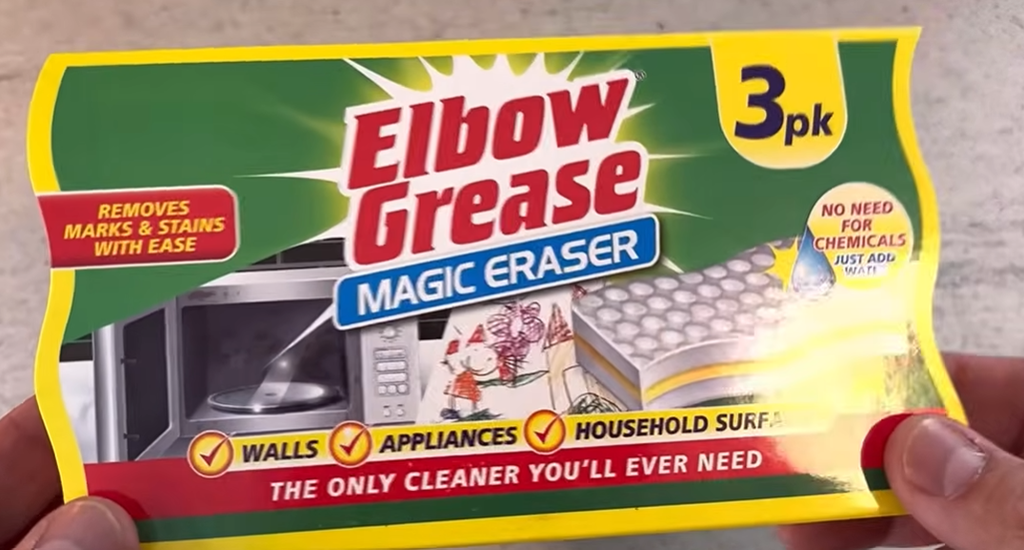
You know those little white cleaning sponges made from melamine foam?
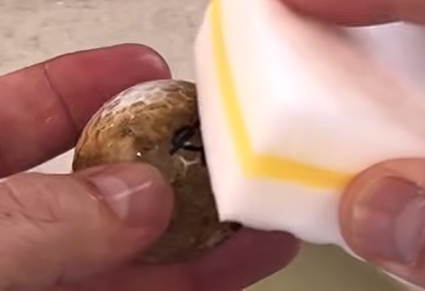
Well, I decided to see what would happen if I used one on a dirty golf ball.
And honestly…
The results were brilliant!
Some of those horrible black surface marks started disappearing almost immediately.
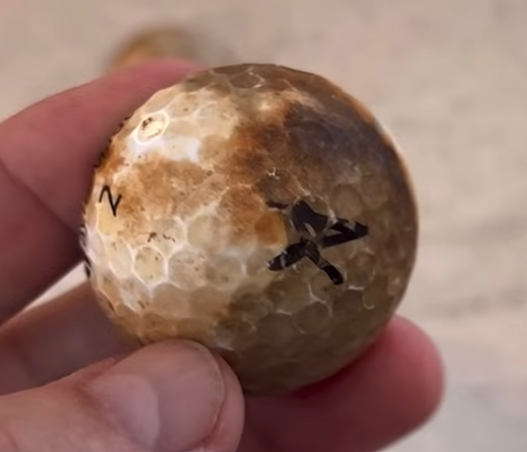
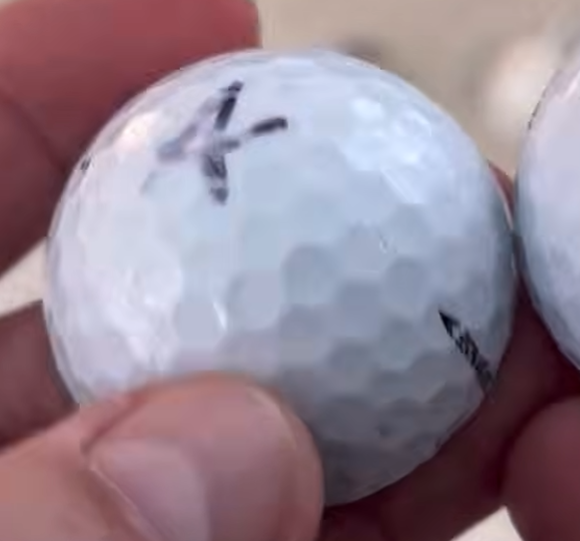
No complicated soaking process.
No pressure washer.
No dishwasher.
Just a damp sponge and a little rubbing.
Watching those marks disappear was incredibly satisfying.
I almost couldn’t believe how quickly it worked.
But there’s something important you need to know.
Are Magic Sponges Safe for Golf Balls?
Magic Sponges are mildly abrasive.
That means they’re not simply dissolving the dirt. They’re also physically rubbing against the surface.
And that could potentially wear away some of the paint or finish if you’re too aggressive.
It’s something I’d be particularly mindful of with expensive urethane-covered golf balls.
I’ve cut open more than 300 golf balls using Jeff, my rather famous golf ball cutting tool, and I’ve seen just how different the construction can be between brands and models.
Jeff was actually named by my YouTube community after a poll, and he’s since developed something of a cult following.
Although I’m not sure he’s particularly happy about the number of golf balls I keep feeding him!
The point is, different golf balls have different covers, and I’d be careful about assuming that a cleaning method suitable for one is automatically suitable for another.
I’d use a damp Magic Sponge gently and only where needed.
And if the mark doesn’t come off easily, I wouldn’t keep scrubbing away indefinitely.
My verdict: For removing stubborn surface marks, this is my favourite method from everything I’ve tried. Just remember that it’s abrasive, so use it sparingly.
So What’s the Best Way to Clean Golf Balls?
After all these experiments, I think the answer is actually pretty simple.
You don’t need to make golf ball cleaning complicated.
Here’s what I’d recommend:
- Everyday mud and dirt: Warm water, a little washing-up liquid and a soft brush or cloth.
- Stubborn black surface marks: A damp Magic Sponge, used gently.
- Large batches of filthy lake balls: Start with a suitable mild cleaning solution and some patience.
- Deep brown or yellow staining: Accept that some discolouration might be permanent.
And I’d avoid routinely using bleach, dishwasher tablets or other aggressive cleaning methods.
But if you asked me which method impressed me most?
It would have to be the Magic Sponge.
It really did surprise me how quickly it removed some of those horrible surface marks.
Although for everyday cleaning, washing-up liquid is still perfectly adequate.
Does Cleaning a Lake Ball Make It as Good as New?
Now, here’s something else worth thinking about.
Just because you’ve managed to make an old lake ball look nice and white again, that doesn’t necessarily mean it’s going to perform like a brand-new golf ball.
And this is where I think golfers need to be a little careful.
I’ve spent years cutting open golf balls, comparing their construction and looking at how different designs perform.
But even if a ball looks perfectly normal inside, that doesn’t prove it’s going to deliver exactly the same distance, spin or consistency as a new one.
Water exposure, age and existing damage are separate questions from how clean the surface looks.
And no amount of scrubbing can fix a damaged cover.
So before putting a recovered ball into play, I’d always give it a proper inspection.
If the cover is cracked, badly cut or visibly damaged, I wouldn’t rely on it.
And if you’re playing a competitive round where consistency really matters, I’d be cautious about assuming an old lake ball will perform exactly like a new one.
My Final Thoughts
If there’s one thing I’ve learned from all these experiments, it’s that sometimes the simplest solutions are the best.
You don’t need a pressure washer.
You don’t need to fill the dishwasher with golf balls.
And you certainly don’t need to spend hours scrubbing away at a stain that might never disappear.
For most golfers, warm water and washing-up liquid will do the job.
And if you’ve got a particularly stubborn surface mark, a Magic Sponge might just surprise you as much as it surprised me.
Just don’t go mad with it!
Ultimately, my whole approach with Up Close Golf is about helping ordinary golfers make better decisions.
Whether that’s choosing a golf ball, understanding what’s inside it or finding a simple way to keep it clean.
Because I’ve always believed you don’t need to spend a fortune to enjoy this game.
And sometimes trying something a little different can make all the difference.
Now I’d love to hear from you.
What’s the strangest thing you’ve ever tried to clean a golf ball with?
Have you discovered something that works better than any of these methods?
Let me know in the comments. I’m always interested in trying something new!
Not Sure You’re Playing the Right Golf Ball?
I’ve put together a free golf ball buying guide to help ordinary golfers understand what really matters when choosing a ball.
No complicated fitting jargon. Just straightforward advice based on everything I’ve learned from testing and cutting open hundreds of golf balls.
Get my free golf ball buying guide
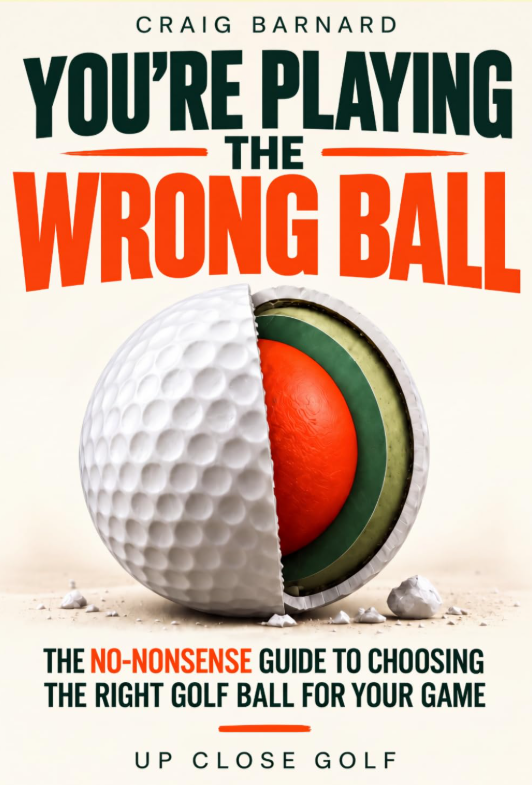
I’ve also written a book, You’re Playing the Wrong Ball: The No-Nonsense Guide to Choosing the Right Golf Ball for Your Game.
If you’d like to learn a bit more about choosing the right golf ball without getting caught up in the marketing, you can find my book on Amazon.
And if you’d like to support the channel, you can always take a look at the Up Close Golf merch shop.
About the Author

Craig is the creator of Up Close Golf, where he’s cut open and reviewed over 300 golf balls to help everyday golfers choose the right ball for their game.
He’s been playing golf for over 30 years, previously worked at one of the UK’s leading golf clubs and is also the owner of Fun Golf, a UK golf blog.
He’s an Amazon best-selling golf author who believes golfers should choose their equipment based on what works for them, rather than simply following the latest marketing claims.